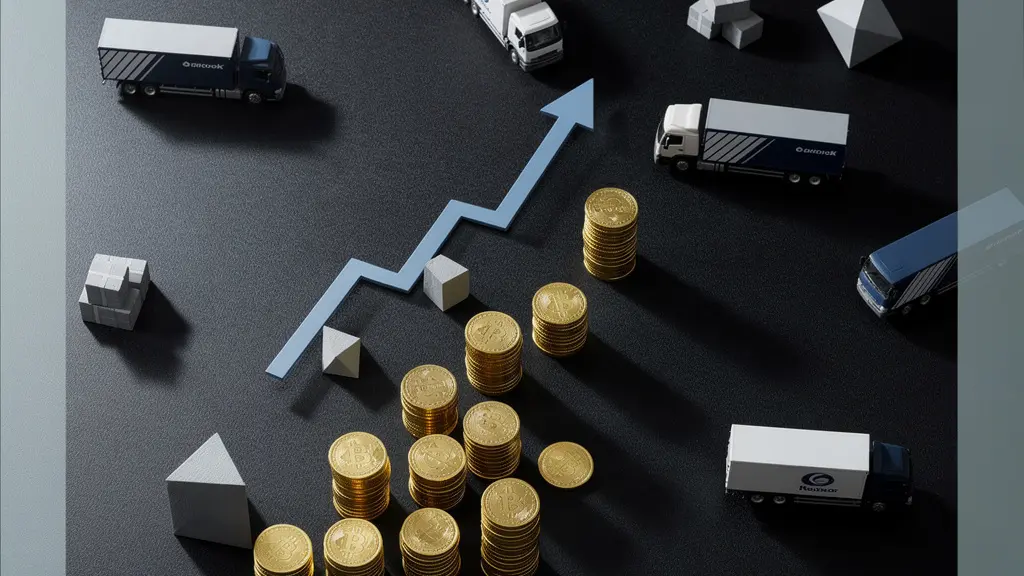
Breaking the $1M e-commerce ceiling is not a marketing challenge; it’s a battle against the operational and financial systems that break under the weight of their own success.
- Initial growth tactics (manual processes, simple platforms) become the primary bottlenecks that halt further scaling.
- Scaling revenue without scaling financial discipline creates a ‘cash conversion cycle trap’ that can bankrupt a profitable business.
Recommendation: Shift focus from front-end growth hacks to back-end system digitalization. Master your inventory, cash flow, and logistics to build a foundation for sustainable scale.
Hitting your first million in revenue is a milestone. It’s proof of product-market fit, sharp marketing instincts, and relentless hustle. But for many e-commerce founders, this peak is followed by a terrifying plateau. Growth sputters, profits shrink, and the business that was once a nimble speedboat starts to feel like a sinking ship. The chaos is palpable: orders get lost, customers get angry, and cash flow becomes a constant source of anxiety.
The conventional wisdom is to double down on what worked: more ads, more products, more channels. Founders find themselves trapped in a frantic cycle of front-end fixes, optimizing conversion rates and launching new campaigns. But this rarely works. The problem isn’t a lack of customers; the problem is that the operational foundation of the business is cracking under the pressure of its own growth. The very simplicity that enabled your early success now actively prevents you from scaling.
But what if the key to unlocking the next level of growth wasn’t in another marketing hack, but in mastering the ‘boring’ back-end? This guide moves beyond the platitudes. We will dissect the concept of ‘operational gravity’—the force that pulls growing businesses toward chaos—and provide a tactical blueprint to overcome it. We’ll explore why your systems stall, how to manage the financial traps of inventory, and why digitalizing your supply chain is no longer an option, but a necessity for survival.
This isn’t about working harder; it’s about building smarter systems that allow your business to grow without crashing. For those who prefer a visual summary, the following video offers key tips on leveraging video marketing to support your business’s promotional efforts, a crucial part of a holistic growth strategy.
To navigate the complexities of scaling, it’s essential to understand each component of the operational challenge. The following sections break down the critical bottlenecks and provide actionable strategies to transform them from barriers into growth levers, ensuring your journey beyond the million-dollar mark is both profitable and sustainable.
Summary: A Tactical Guide to Breaking the E-commerce Growth Plateau
- Why Your E-Commerce Store Stalls After the Initial Growth Spurt?
- How to Migrate from Shopify to Custom Solutions Without Losing SEO Traffic?
- Amazon FBA vs. Own Website: Which Yields Higher Margins for Niche Brands?
- The Inventory Error That Bankrupts 30% of Growing E-Commerce Brands
- How to Automate 50% of Customer Support Without Angering Buyers?
- How to Cut Last-Mile Delivery Times by 30% Using Route Optimization AI?
- Why Running Out of Stock Costs More Than Just the Lost Sale?
- Reducing Logistics Costs by 20% Through Supply Chain Digitalization
Why Your E-Commerce Store Stalls After the Initial Growth Spurt?
The exhilarating climb to seven figures is often powered by agility, intuition, and simple tools. But the very engine of that initial success—a lean operation—becomes an anchor when you try to scale further. This is operational gravity: the accumulation of manual processes, hidden costs, and technical debt that creates a revenue ceiling. As you increase ad spend, you notice a deteriorating Return on Ad Spend (ROAS). Each new dollar spent brings in marginally less revenue, and profits begin to shrink despite a rising top line. This isn’t a marketing problem; it’s a system problem.
As one fractional CFO specializing in scaling brands notes, the journey from 7 to 9 figures is determined by mastering “boring” financial fundamentals, not by finding the next growth hack. Scaling adds complexity that manual systems can’t handle. Founder time gets consumed by putting out operational fires instead of focusing on strategic growth. Administrative overhead for HR, finance, and operations balloons, eating into margins. The simple Shopify setup that was a blessing at day one becomes a cage, limiting your ability to customize, optimize, and integrate effectively.
This stall isn’t a sign of failure; it’s a predictable rite of passage. It signals that your business has outgrown its initial infrastructure. To break through, you must shift your focus from simply acquiring customers to building a resilient operational machine that can handle volume efficiently. It requires a conscious audit of the systems that are holding you back and a strategic plan to replace them before they cause the entire structure to crash mid-flight.
Action Plan: Diagnosing Your Scaling Bottlenecks
- Audit your ROAS deterioration as you scale ad spend beyond comfort zones.
- Map out hidden admin costs (HR, operations, finance) that don’t directly generate revenue.
- Identify which channels truly own customer relationships vs. just processing transactions.
- Calculate actual fulfillment costs, including returns and damages at scale.
- Document all technical debt from early platform decisions and app integrations.
- Assess founder time allocation between strategic work vs. operational tasks.
- Review inventory management systems for scale-readiness before growth.
How to Migrate from Shopify to Custom Solutions Without Losing SEO Traffic?
The decision to migrate from a platform like Shopify to a custom or headless solution is one of the most daunting steps in scaling. The fear of losing years of accumulated SEO equity is paralyzing. However, as your business grows, the limitations of an all-in-one platform—rigid URL structures, app bloat slowing down the site, and lack of deep customization—become a significant drag on performance. For instance, a faster site is non-negotiable for conversions; research shows that a one-second site speed improvement can increase mobile conversions by up to 27%. Achieving this level of optimization often requires a more flexible architecture.
A successful migration is not a simple “lift and shift.” It’s a meticulous technical SEO project disguised as a web development project. The core principle is zero-loss redirection. Every single URL from your old site—products, collections, blog posts, even image files—must be mapped to its new equivalent with a permanent 301 redirect. This tells search engines that the page has moved permanently, transferring the vast majority of its ranking authority.
This process demands a detailed blueprint before a single line of code is written. You must crawl your entire existing site to create a comprehensive URL map. The new site architecture should be planned to improve upon the old, with cleaner URL structures and better internal linking. The migration itself should be executed during a low-traffic period and be followed by intensive monitoring using Google Search Console and other SEO tools to immediately catch and fix any 404 errors or redirect chains. Done correctly, a migration doesn’t just preserve SEO; it becomes a springboard for even greater organic visibility by unleashing superior performance and user experience.

As this visualization of a system architecture suggests, a migration is a complex interplay of interconnected parts. It requires a strategic approach where technical infrastructure is built not just for today’s traffic, but for tomorrow’s scale. The goal is to build for systemic scalability, where your platform is no longer a constraint but a competitive advantage.
Amazon FBA vs. Own Website: Which Yields Higher Margins for Niche Brands?
For a growing brand, the “Amazon question” is inevitable. The platform offers unparalleled access to a massive customer base and promises to handle the headaches of fulfillment through its FBA program. However, this convenience comes at a steep price: margin erosion and loss of brand control. Relying solely on Amazon means you are building your house on rented land. You have no direct access to customer data, making remarketing and building long-term loyalty nearly impossible. Furthermore, the environment is fiercely competitive and commoditized, forcing you into price wars and mandatory PPC spend just to remain visible.
An owned website, by contrast, offers complete control. You own the customer relationship, you control the brand experience from discovery to unboxing, and most importantly, you retain a significantly higher portion of the revenue. While the initial traffic acquisition is slower and more expensive, the long-term customer lifetime value (LTV) is far greater. The key is to understand the fundamental trade-offs between the two channels.
The following table, based on an analysis of e-commerce channel performance, highlights the critical differences a scaling brand must consider.
| Channel Aspect | Amazon FBA | Own Website |
|---|---|---|
| Average Fees | 15-45% of sale price | 2.9% + payment processing |
| Customer Data Ownership | No direct access | Full ownership and control |
| Marketing Costs | Mandatory PPC spend for visibility | Variable CAC based on strategy |
| Brand Control | Limited, commoditized | Complete brand experience |
| Sales Velocity | Higher initial volume | Slower but higher lifetime value |
The Hybrid Halo Effect Strategy
The smartest niche brands don’t choose one or the other; they use a hybrid strategy. They leverage Amazon purely for customer acquisition, accepting lower 15-20% margins on first-time purchases. The magic happens in the fulfillment process. By including high-quality packaging inserts, QR codes for warranty registration, or exclusive content offers, they create a bridge to their own ecosystem. This tactic successfully drives customers to their owned website for future purchases. One analysis found this strategy resulted in 30% of Amazon customers making their second purchase directly on the brand’s website, where margins were 40-50% higher.
The Inventory Error That Bankrupts 30% of Growing E-Commerce Brands
For a scaling e-commerce business, the most dangerous threat isn’t a competitor; it’s the company’s own cash flow. The single biggest cause of this is a misunderstanding of the Cash Conversion Cycle (CCC)—the time it takes to convert inventory investments into cash. As you scale, this cycle becomes a deadly trap. A rapidly growing brand might order $10,000 of inventory from a supplier, pay for it upfront, and then wait 60 days for it to be manufactured and shipped. Add another 30 days of holding the inventory before it sells, and you’re at 90 days before you see a return.
The problem is that to fuel growth, you must place the next, larger order—say, $40,000—before the cash from the first order has even been collected. As a Wayflyer analysis on growth cash traps demonstrates, this quadruples the cash tied up in your supply chain. You can be wildly profitable on paper but completely illiquid in reality, unable to pay suppliers, staff, or ad agencies. This is how profitable businesses go bankrupt. Many founders also make the critical error of budgeting based on the FOB (Free on Board) factory price, forgetting that the true landed cost—including freight, duties, and customs—can be 20-30% higher, leading to severe underestimations of capital needs.
The solution isn’t to stop growing. It’s to aggressively manage and shorten your cash conversion cycle. This involves three key levers. First, negotiate better payment terms with suppliers (e.g., 30/40/30 split payments or Net 60 terms) to align your cash outlays with your cash inflows. Second, improve your inventory turnover rate so that cash isn’t sitting on a warehouse shelf. Third, explore models like dropshipping or pre-orders for new product launches to collect customer payment before you even procure the inventory, creating a negative cash conversion cycle—the holy grail of e-commerce finance.
How to Automate 50% of Customer Support Without Angering Buyers?
As order volume skyrockets, your customer support inbox becomes a pressure cooker. The manual, high-touch support that won you your first 1,000 fans is impossible to maintain. Hiring a massive support team is a direct hit to your margins. The temptation is to throw up a generic chatbot and hope for the best, but this often backfires spectacularly. Poor customer service is poison for a growing brand; research by Zendesk reveals that 95% of customers share poor experiences with others, turning a solvable problem into a public relations disaster.
The goal of automation isn’t to replace humans, but to empower them. A smart automation strategy focuses on triaging issues, not just deflecting them. The objective is to instantly resolve the 50% of tickets that are repetitive and low-value, freeing up your human agents to provide exceptional service on the complex, high-value issues that truly impact customer loyalty. This starts with a robust, self-service knowledge base or FAQ section that answers the most common questions before a ticket is even created.
The next layer is an intelligent automation platform—not a simple chatbot. This system should integrate directly with your e-commerce platform (like Shopify) and logistics providers. When a customer asks, “Where is my order?” the system should be able to instantly pull the tracking data and provide a real-time answer, without any human intervention. For more complex issues, the system’s role is to act as an intelligent dispatcher, gathering necessary information (like order number and issue type) upfront and routing the ticket to the correct human agent with all the context they need. This combination of self-service, intelligent automation, and empowered human agents allows you to scale support efficiently while actually improving the customer experience.

This approach transforms customer service from a cost center into a scalable retention engine. It respects the customer’s time by providing instant answers to simple queries while ensuring that complex problems receive the thoughtful, empathetic attention of a well-prepared human expert.
How to Cut Last-Mile Delivery Times by 30% Using Route Optimization AI?
In the age of Amazon Prime, customer expectations for delivery speed are ruthless. A slow or unpredictable last-mile experience is no longer a minor inconvenience; it’s a reason to lose a customer forever. For brands managing their own local delivery or coordinating with multiple carriers, the last mile often becomes the most expensive and inefficient part of the entire supply chain. Manually planning routes is time-consuming and grossly inefficient, leading to wasted fuel, excessive driver overtime, and missed delivery windows.
The solution lies in leveraging route optimization AI. These software platforms use sophisticated algorithms to solve the “Traveling Salesperson Problem” on a massive scale. They ingest a list of delivery addresses and, within seconds, calculate the most efficient sequence of stops for an entire fleet of drivers. But modern systems go far beyond simple mapping. They are dynamic logistical brains that factor in a multitude of real-time variables: current traffic patterns, vehicle capacity constraints, driver work-hour limits, and even realistic service time estimates for different types of stops (e.g., a residential drop-off vs. a commercial delivery requiring a signature).
By implementing this technology, businesses can typically reduce their total mileage and drive time by up to 30%, a direct saving on fuel and labor costs. More importantly, it dramatically improves the customer experience. AI-powered systems can provide customers with hyper-accurate ETAs and proactive notifications, reducing “where is my order?” support tickets. It also allows for dynamic replanning, so if a driver gets stuck in traffic, the system can automatically re-route them and update all subsequent delivery windows.
Gelato’s Global Print Network Optimization
A brilliant example of logistical innovation comes from Gelato, a print-on-demand company. Instead of shipping products from a central warehouse, their system automatically routes each order to the nearest production partner within their global network. This localized production and fulfillment model drastically reduces shipping distances and costs. This strategy not only results in faster last-mile delivery but also significantly reduces the carbon footprint of each order, aligning perfectly with the values of eco-conscious consumers and turning logistics into a powerful brand statement.
Why Running Out of Stock Costs More Than Just the Lost Sale?
Most founders view a stockout as a missed opportunity: one lost sale. The reality is far more damaging. A stockout is a multi-layered financial and strategic disaster that silently sabotages your growth. The most obvious cost is the lost revenue from the immediate sale, but the secondary costs are what truly hurt a scaling brand. When a potential customer lands on a product page only to find it’s unavailable, they don’t wait. They bounce. A significant portion will go straight to a competitor and may never return, costing you not just one sale, but that customer’s entire lifetime value (LTV).
Beyond the customer impact, stockouts inflict deep and lasting damage on your marketing and SEO efforts. As leading e-commerce SEO specialists have noted, the consequences are severe.
A prolonged stockout on a popular product page increases bounce rates, tanks user engagement signals, and can cause Google to permanently lower its organic ranking.
– E-commerce SEO Specialists, Industry Analysis Report
You spend months and thousands of dollars to get a product to rank on the first page of Google. A stockout tells Google that your page provides a poor user experience, and your ranking can plummet. The same goes for paid ads: you’re paying to send traffic to a dead end, wasting ad spend and damaging your ad account’s quality score. Effectively managing inventory to avoid both overstocking (which kills cash flow) and understocking (which kills growth) is a delicate balancing act, measured by the inventory turnover ratio. While this varies by industry, Q4 2024 benchmarks showed the industry average inventory turnover ratio reached 10.19, providing a useful gauge for performance.
A stockout isn’t just an “out of stock” message. It’s a signal of unreliability to both customers and search engines, with compounding negative effects that can take months to reverse. It underscores the critical need for a sophisticated inventory management system that can accurately forecast demand and trigger reorders well before stock levels become critical.
Key Takeaways
- Scaling past $1M is an operational challenge, not a marketing one. The systems that brought you success will become your biggest bottlenecks.
- Cash flow is the lifeblood of an e-commerce business. Mismanaging your inventory and cash conversion cycle is the fastest way to bankrupt a profitable company.
- True scalability comes from system digitalization. Automating inventory, logistics, and customer support is not a luxury but a requirement for sustainable growth.
Reducing Logistics Costs by 20% Through Supply Chain Digitalization
For many growing e-commerce brands, the supply chain is a black box managed by a patchwork of spreadsheets, emails, and manual check-ins. This lack of visibility and control is a massive source of cost and inefficiency. Digitalization is the process of transforming this fragmented, manual system into a single, automated, data-driven machine. It means implementing a central hub—often a lightweight ERP or an advanced Inventory Management System—that connects all the moving parts of your operation in real-time. This provides a single source of truth for your entire business.
The impact is immediate and transformative. Instead of manually creating purchase orders in a spreadsheet, the system can be configured with automated reorder points based on sales velocity and supplier lead times, preventing both stockouts and overstocking. This move from manual processes to an integrated digital system is the final step in conquering operational gravity. According to J.P. Morgan’s 2024 Working Capital Index, even among the largest companies, operational efficiency is a constant struggle, as the S&P 1500 average cash conversion cycle increased by 2.4 days, highlighting the universal need for better systems.
With a digitalized supply chain, you gain the ability to track partner performance with live KPI dashboards instead of relying on outdated monthly reports. You can monitor your 3PL’s on-time shipment rate and your suppliers’ OTIF (On-Time In-Full) delivery rates. This data is not just for observation; it’s leverage. It allows you to hold partners accountable and negotiate better terms with those who consistently perform well. The difference between a manual and digital operation is stark, leading to dramatic reductions in errors and time spent on low-value tasks.
| Operation Aspect | Manual Process | Digitalized System |
|---|---|---|
| Purchase Order Creation | Spreadsheets, email approvals | Automated reorder points based on velocity |
| Inventory Accuracy | 70-80% accurate | 95-99% real-time accuracy |
| Partner Performance Tracking | Monthly manual reports | Live KPI dashboards |
| Error Rate | 5-10% human errors | <1% system errors |
| Time to Process Orders | 2-4 hours daily | 15-30 minutes automated |
By shifting focus from chasing the next sale to building a resilient operational infrastructure, you transform growth from a source of chaos into a predictable, manageable process. The path beyond the million-dollar ceiling is paved not with marketing hacks, but with smart systems.
Frequently Asked Questions on Scaling E-commerce
Why do 90% of ecommerce businesses fail in the first year?
Poor cash flow management is the primary cause, with inventory mismanagement creating situations where businesses show profit on paper but lack actual cash to operate.
What’s the difference between FOB and landed cost?
FOB (Free on Board) is the factory price, while landed cost includes freight, duties, and customs – typically 20-30% higher than FOB, causing dangerous capital requirement underestimations.
How can I achieve negative cash conversion cycle?
Negotiate net 60 payment terms with suppliers while maintaining 30-day inventory turnover, or implement dropshipping and pre-order models to collect payment before procurement.